
Virginia Bear Mange Study

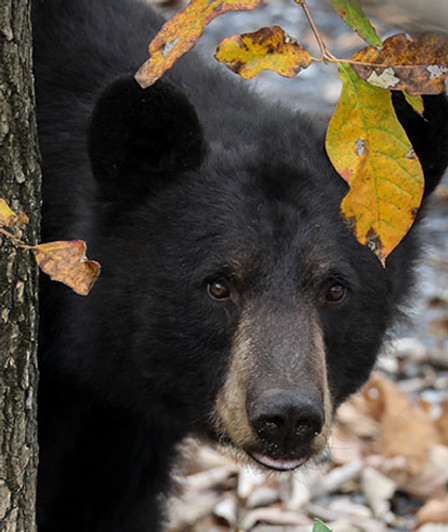
Sarcoptic mange is a highly contagious mammalian skin disease caused by an infestation of mites (Sarcoptes scabiei) that threatens the persistence of abundant black bear populations, their ecological roles, and their recreational and cultural importance. In Virginia, sarcoptic mange recently spread rapidly along the western mountains, yet neither the short nor long-term demographic, health, or behavioral consequences of sarcoptic mange on black bear populations are known.
To study the impact on the population, we will be estimating American black bear densities in Virginia’s Allegheny and Blue Ridge Mountains through spatially explicit, mark-recapture analysis using DNA from hair samples collected at barbed-wire corral traps (i.e., hair snares). We plan to assess the impact of sarcoptic mange on bear population density by comparing areas with high mange detection to areas without known mange detection. We will also be monitoring the hair snares in mange-endemic areas with trail cameras to assess the severity of mange at each of these sites.
To better understand the impact of mange, we are equipping adult female black bears with GPS tracking collars. We are also equipping all male, juvenile, and subadult bears with VHF ear tag transmitters. These devices will allow us to monitor mortality and reproduction for 2-3 years. To understand the potential impact of mange on bear reproduction, we will conduct den checks of GPS-collared female bears in February-March which will allow us to count cubs and conduct health checks on both mother and cubs. Armed with mortality and reproductive data in hand, we will quantify how mange infections are impacting both the short and long-term population size of black bears.
Mange is also thought to alter bear behavior by increasing the need for food to support an immune mediated response to combat the mite infestation. Because mange disease causes bears to lose considerable amounts of hair, we also expect mange-affected bears to shift their habitat use towards those offering cooling temperatures in summer and warmer temperatures in winter, and potentially towards more human-occupied habitats that offer, high calorie foods, such as bird feeders, trash cans, and agricultural fields. To determine how mange influences bear activity patterns, habitat selection, and interactions with humans, we will statistically analyze the GPS tracking data. By doing so, we hope to understand the relative roles the immune and behavioral responses play in the declines in body condition often associated with mange disease and, ultimately how declines in body condition lead to declines in reproduction and survival.
Virginia Bear Mange Study

Meet the VBMS Team
The VBMS Team is composed of researchers at Virginia Tech and biologist from the Virginia Department of Wildlife Resources, click on the bear image above to learn more about them!

Virginia Department of Wildlife Resources
The Department of Wildlife Resources is responsible for the management of inland fisheries, wildlife, and recreational boating for Virginia.

Wildlife Ecology Restoration Conservation Lab
Dr. Brett Jesmer's WERC Lab
partners with agencies to
identify key conservation
concerns, then uses
movement, remotely-sensed,
molecular, isotopic, and field
data to generate new knowledge, both basic and applied, that helps its partners address their concerns.

Wildlife Habitat & Population Analysis Lab
Dr. Marcella Kelly's WHAPA Lab focuses
on estimating demographic parameters
for difficult-to-track large, forest-dwelling carnivores in order to promote
biodiversity conservation.